
From Oct. 15 to 16, the project team under “Rural Revitalization and Senior Care Program” of China Foundation for Human Rights Development (CFHRD) joined partner companies and volunteers in Fengning Manchu Autonomous County, Chengde, north China’s Hebei Province, to visit disabled and semi-disabled older residents living at home in rural communities.
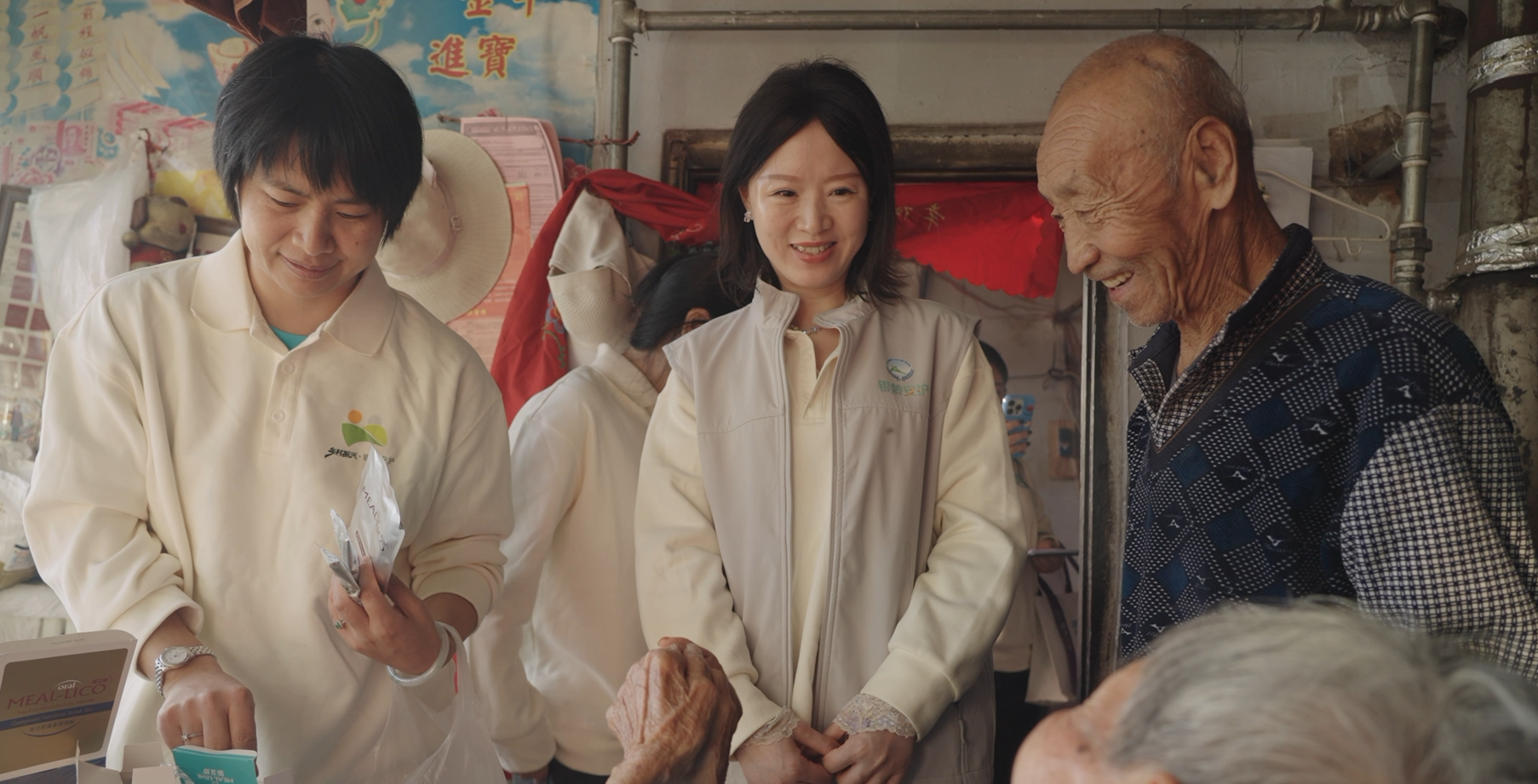
The group delivered holiday greetings and assistance, while also joining villagers in celebrating the harvest and sharing a banquet honoring senior residents.
During the visits, volunteers and township officials delivered cash gifts and foods for special medical purposes to older beneficiaries enrolled in the program, and spoke with them and their families about their health and daily lives.
Many of the elderly beneficiaries are bedridden or have limited mobility, making regular home visits essential. Mr. Li, a resident of Tianqiao Village, was enrolled in the program when it began in August last year. At the time, he needed help even to turn over in bed or eat.
His son and daughter-in-law have actively supported his rehabilitation, consulting caregiving experts whenever the project team visits. He can now sit up on his own, walk slowly, and largely manage eating and dressing independently.
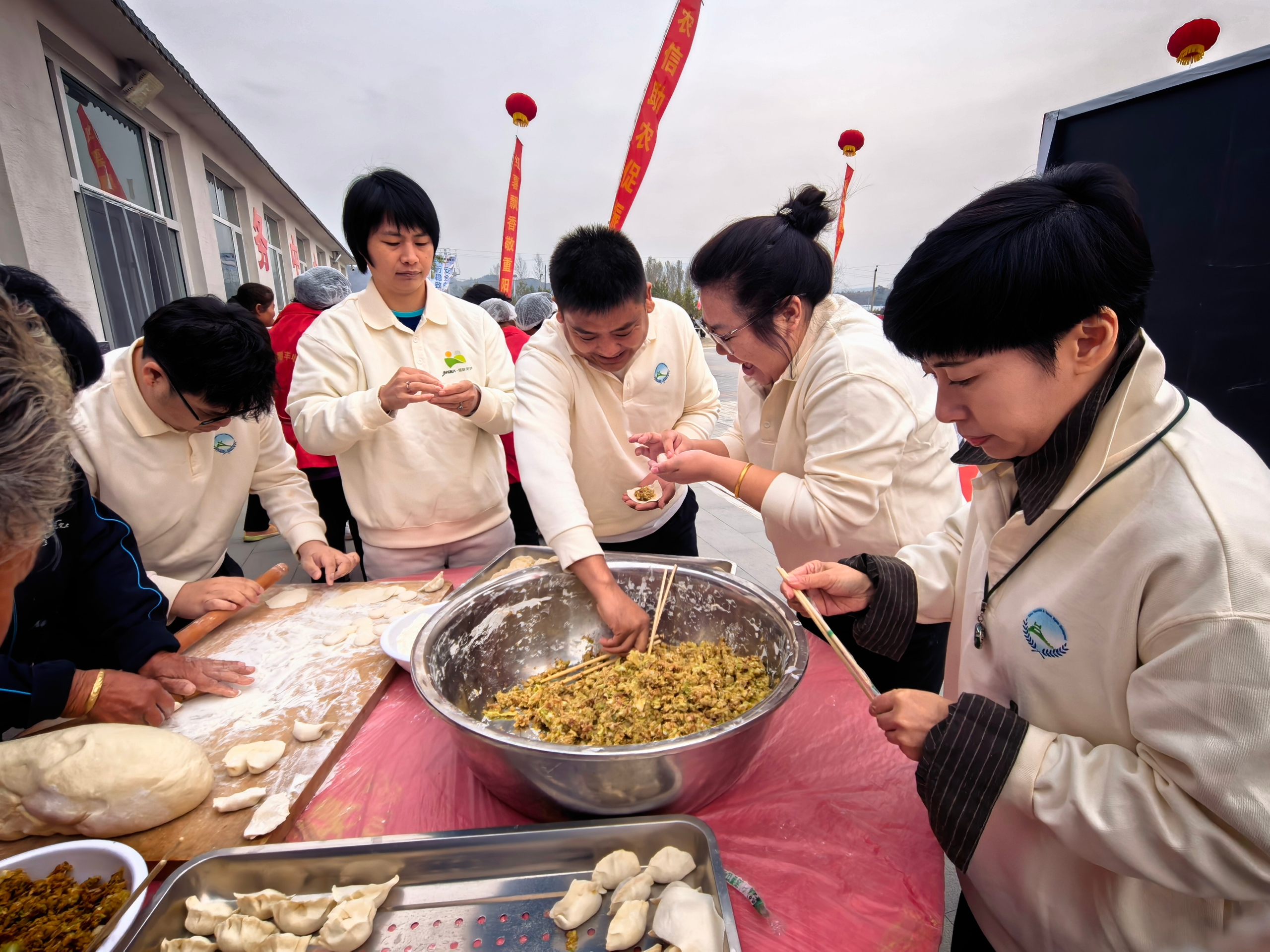
CFHRD also participated as a supporting organization in a harvest festival held at the square of Kuangou Village in Shirengou Township. Sweet potatoes from this year’s harvest were displayed at the event, which drew villagers from nearby communities for performances and a banquet honoring the elderly.
Shirengou Township is a new service area for the program this year. The initiative was first launched in Tianqiao and Heishanju towns before expanding to Shirengou.
Kuangou Village is serving as a pilot site for the program’s exploration of a village-level elderly care model. In August, the program held its first intensive training course for rural caregivers there. Nearly 30 certified rural women received hands-on instruction from professional organizations, helping them move from having qualifications but little practical experience to being able to make home visits and perform caregiving tasks.
Using an existing canteen for senior residents, the program has also supported the establishment of a senior care station providing meals, caregiving services and activities. The station serves several surrounding villages, creates local job opportunities for women, and helps connect disabled older residents with much-needed care services.
A recent joint notice issued by the Ministry of Civil Affairs, the Ministry of Human Resources and Social Security, and the Ministry of Agriculture and Rural Affairs called for developing public-service jobs for rural elderly care assistants, encouraging elderly care providers to establish local service stations and offer professional guidance, and supporting assistants in providing services close to home.
The approach is closely aligned with the program’s ongoing efforts to train local caregivers and establish service points in villages, enabling older residents to receive care without leaving their communities.
Going forward, the program will further develop its village-level pilot model and work to extend it to more rural communities.